Numeration and Ordinal Counting
Submitted by Marisa Teply, Preschool-3 Lead Teacher
“A million hundred twenty five” – children often enter our preschool-3 program with fanciful conceptions of what numbers are and mean. In our curriculum, numeration and ordinal counting occur in our classroom routines and activities in conjunction with grouping, classification and other math related exercises. These activities serve as a basis for forming and guiding mathematical awareness – such as recognition, appreciation, extraction, size, and proportion.
Some classroom jobs that the children enjoy specifically involve numeration and ordinal counting:
• In preparation for our classroom morning meetings, a child acting as Number Helper will place magnetic numbers in the correct order under our class’s daily schedule cards.
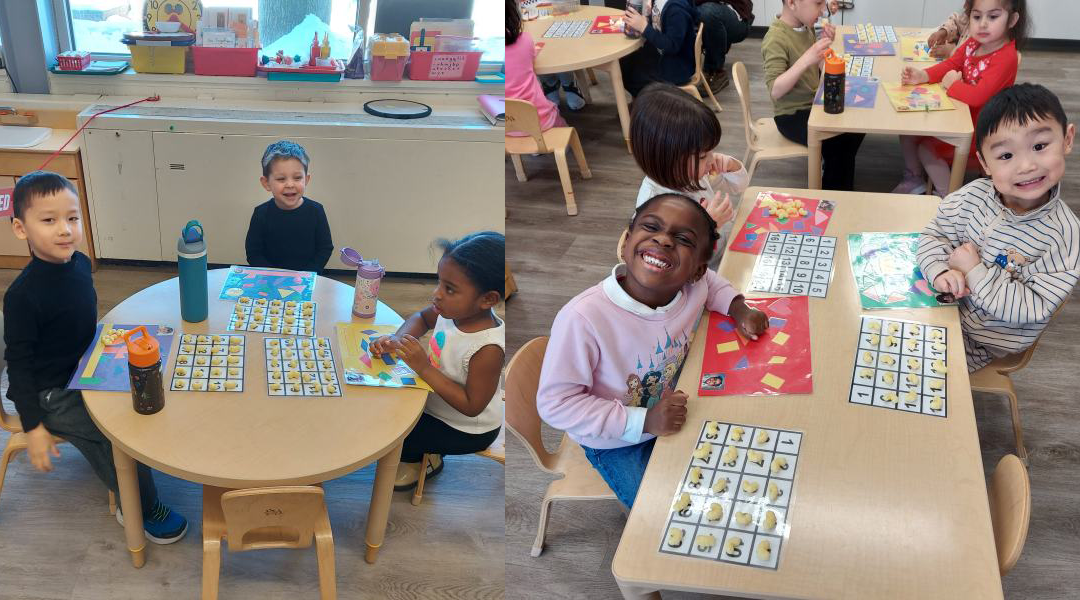
• Snack Helper has the job of counting place mats and the number of children present for snack. During snack, number grids are often passed out to the children, which they will use to carefully count out the small crackers served.
• Ordinal counting is often practiced when the children line up to leave the classroom. The appointed Number Helper will sometimes pass out number cards for the children to locate their place in the line.
In the classroom there are math shelves filled with many math games and activities. Preschool-3 math games and activities begin with simple activities that involve counting quantities up to 10:
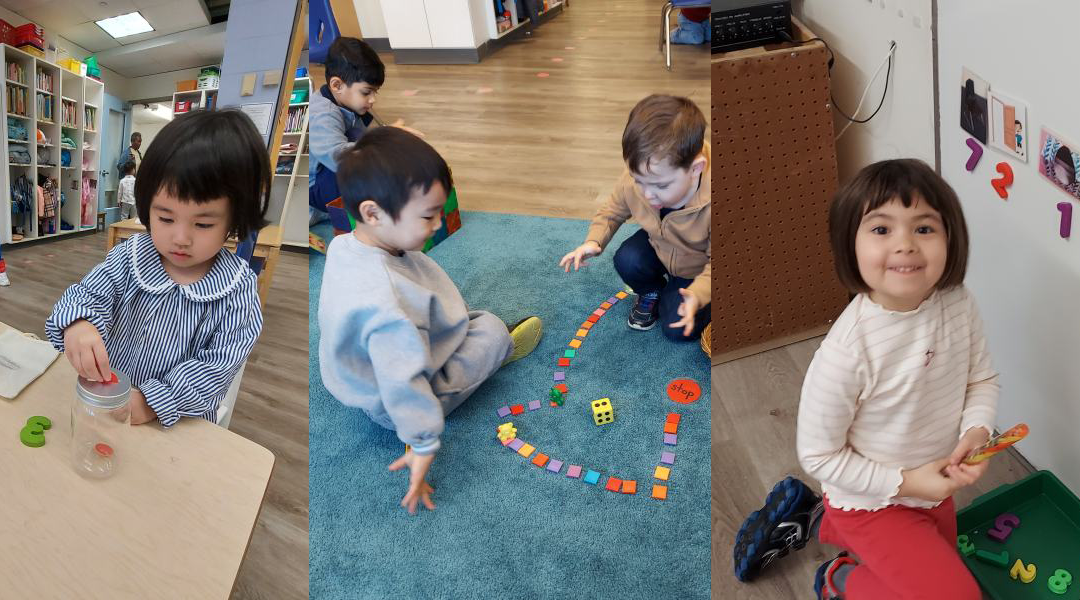
• Mystery Number Bag involves pulling a number out of a bag and counting the correct quantities into a jar.
• Twisty Road involves small tiles, a die, and two teddy bear counters. Partners create a road with the tiles. Then each child rolls the die to move their bear over that number of tiles until one of the players reaches the finish line.
• The Detective Game involves magnetic pictures of assorted classroom items, a pointer, and magnetic numbers. The child chooses a picture and, using the pointer, counts how many of that item he can find in the classroom. The children enjoy hunting for and discovering how many chairs, clocks, tables, garbage pails, and so forth exist in their learning environment.
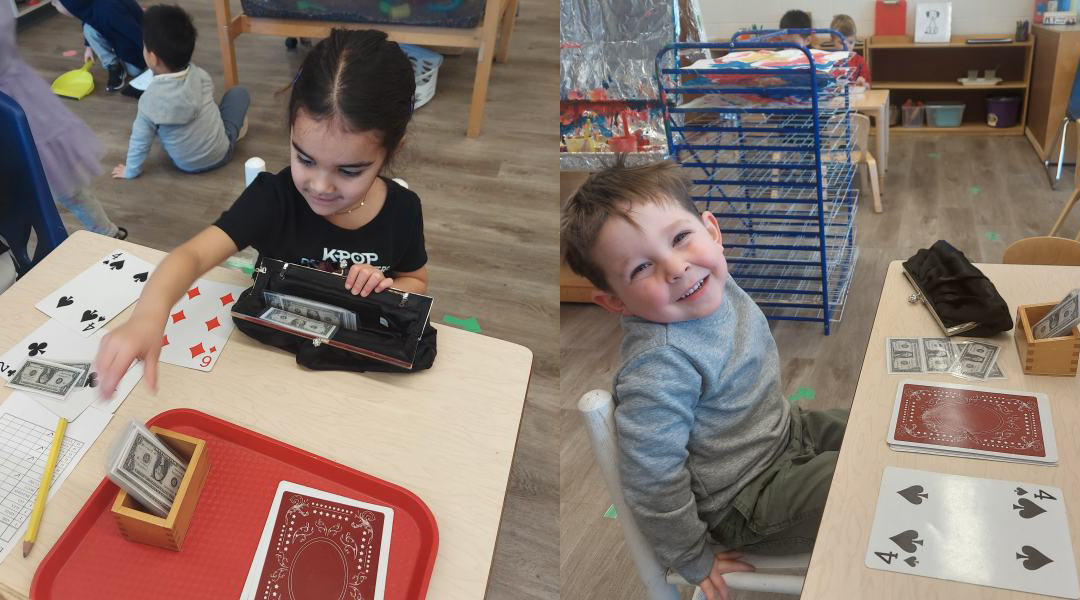
• The Dollar Game involves dollar bills, playing cards, and a purse. The child flips over the playing cards, counts out the dollars, then adds them up and puts them into the purse.
Many counting games involve partners. While we don’t stress the concept of winners and losers, we like to emphasize the concepts of “more,” “less,” and “same as” when laying out and counting quantities at the finish of a game.
Our Preschool-3 children enjoy being able to carefully and accurately count and compare quantities while playing together. They begin to recognize numbers in everything they do.