Follow That Map! A Preschool-4 Adventure
Submitted by Nicole Taranto, Kimberly Situ, Mary Cushman, Raishada Johnson, Preschool 4 Team
In Preschool-4, our exploration of maps started with understanding our immediate personal space and expanded to navigating the wider world. This project-based journey encourages students to see maps as living tools that help us understand our community and our place within it. By building skills like spatial reasoning and symbolic thinking, our young learners are discovering how maps lead to hands-on adventure.
Here is how our map study expanded across the globe:
- Mapping the Self and Classroom: Our journey began with “rug maps,” where children used visual guides to find their assigned seats, building foundational skills in independent navigation and spatial awareness.
- Navigating Our Campus: We transitioned from the classroom to the D-E campus by creating a custom map filled with student-identified landmarks. The pinnacle of this study was a student-led expedition to Collins House, where the class had a special meeting with the Head of School, Dr. CW. The preschoolers applied their navigational skills to plan a route and locate a real home within our school community.
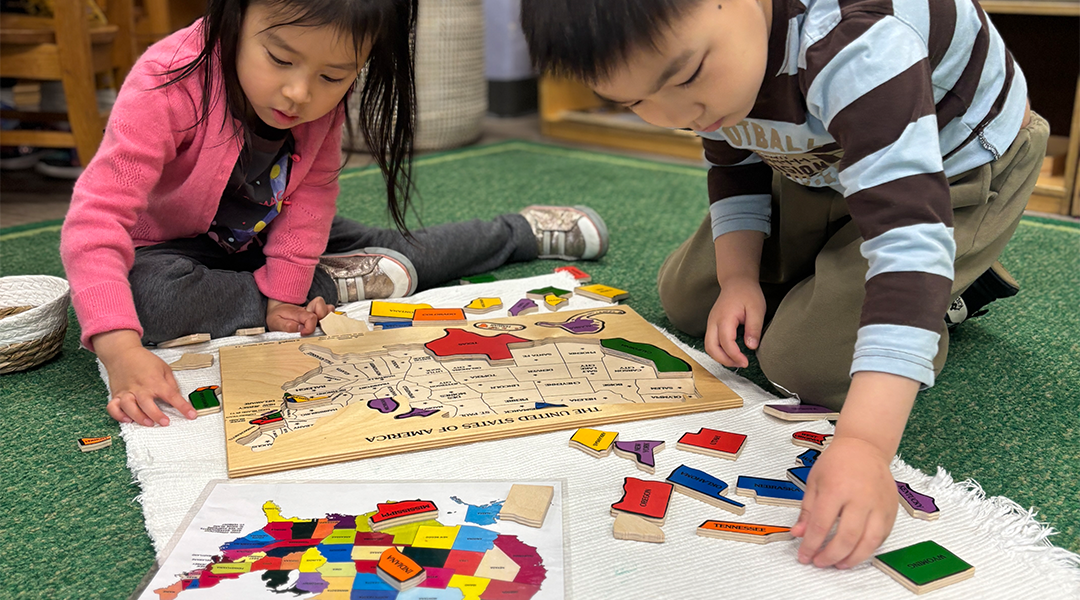
- Locating Our Towns and State: Zooming out further, we used a poster-sized map of Northern New Jersey counties. Students pinned their own photos to their hometowns, connecting their personal lives to our broader school community and the geography of our state.
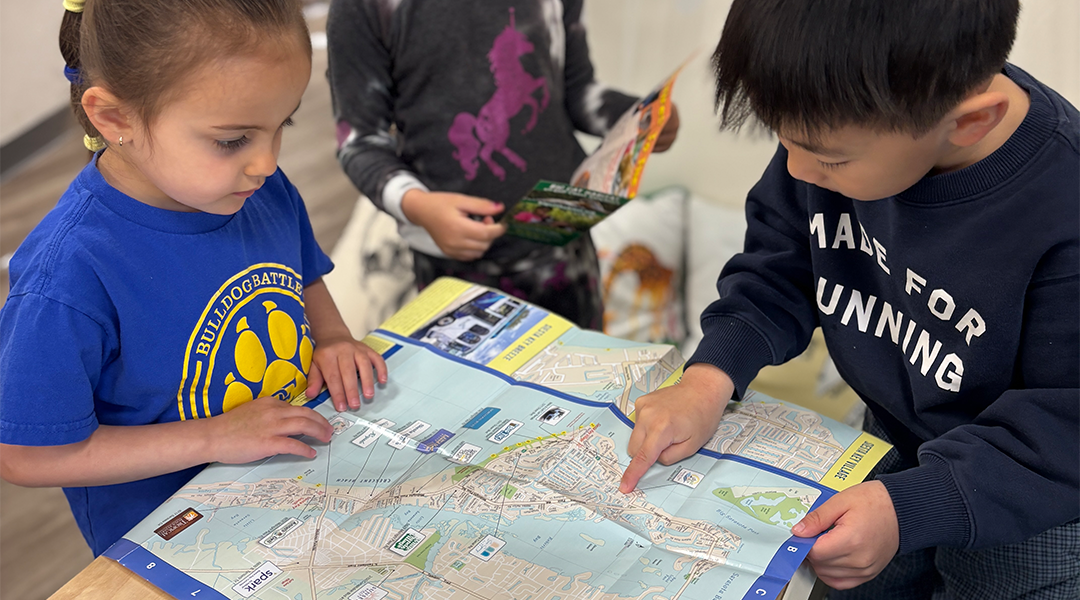
- Connecting to the World: Our collection grew with maps contributed by families from their Spring Break travels. Students compared diverse legends and symbols from parks, beaches, and cities around the globe, bridging the gap between New Jersey and distant lands.
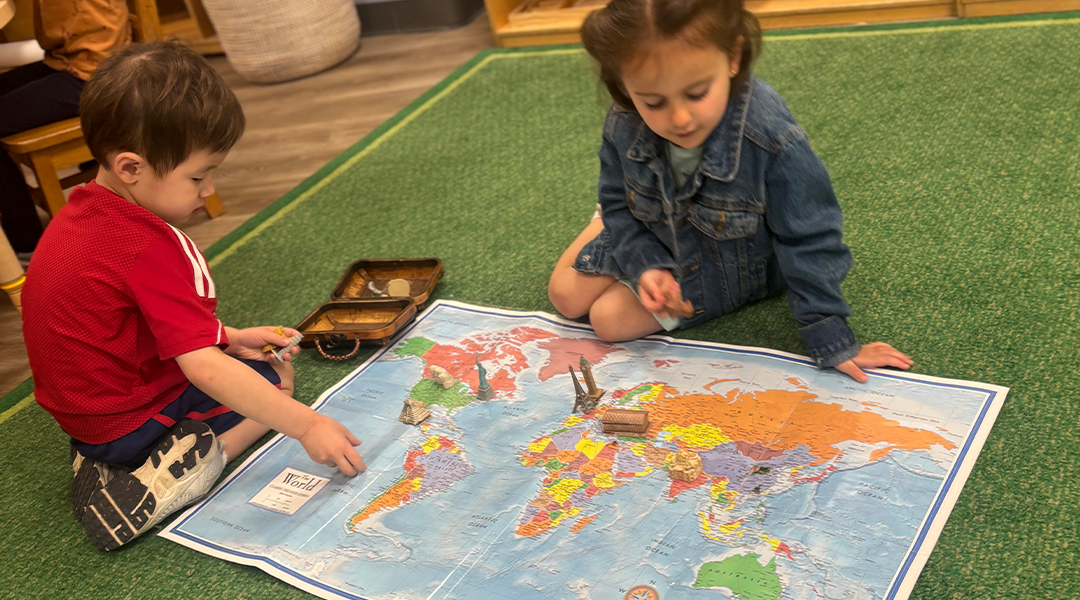
- Global Citizenship and Landmarks: To expand our world study, students made their own passports and “traveled” to famous landmarks they recreated with loose parts to earn stamps for their classroom passports.
- Designing Our Own Maps: Inspired by their explorations, students stepped into the role of mapmakers to design their own maps. Whether charting the winding paths of a hidden treasure hunt or mapping the layout of Rocky’s Field, the children used these creations to tell stories about the spaces they know and imagine.
Through this comprehensive exploration, the Preschool-4 students have transformed from curious observers into confident cartographers, recognizing that maps are essential tools for navigating both their physical environment and their social connections.